The Unsettling Presence of Francis Bacon

Frieze noted what Bacon spent a lifetime demonstrating: that the most powerful portrait is one made not from the subject in front of you but from the force the subject cannot contain. He worked from photographs, from memory, from the sensation of knowing a face rather than the act of seeing it — because the truth of a face is never on its surface. It is in what moves beneath. Nietzsche called this the difference between Apollonian surface and Dionysian energy: the composed mask, and the irrational force it struggles to hold in place. Bacon's portraits are the moment the mask fails. The screaming mouth beneath the composed Pope. The body dissolving in the shuttered, claustrophobic frame. What Frieze's review of Human Presence made clear is that Bacon's engagement with portraiture was never about likeness. It was about force.
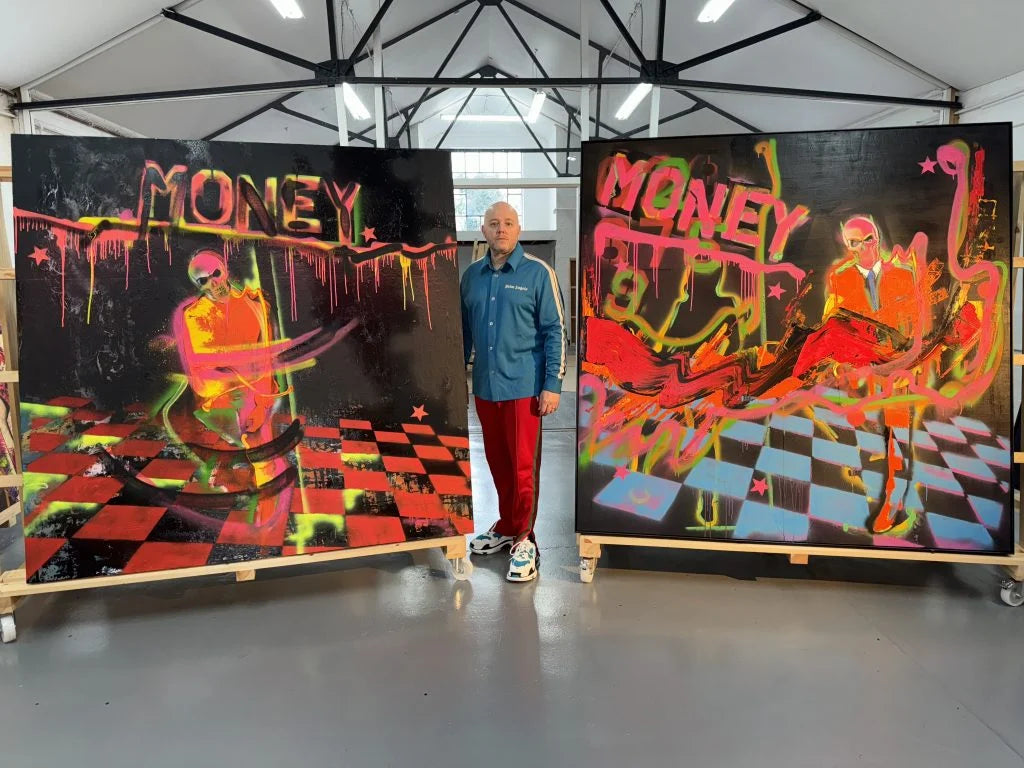
Townley paints the same way. He does not paint bankers. He paints banking — the energy of capital moving through bodies that no longer need to acknowledge it. The suits are intact. The faces have dissolved. What remains is the force itself: hunger, transgression, the insatiable desire for glory dressed in City of London clothing. There is also, in this, a geography that is more than coincidence. Townley spent his years at 40 Dean Street in Soho. Bacon's Colony Room Club was at number 41 — a room Bacon frequented for more than four decades, where he drank with Lucian Freud and Frank Auerbach and painted the people he met there. They never met. The address was the same. Some inheritances are not chosen.